DETA Design Studio
The part you need, engineered.
Describe the part. Confirm the specification. DETA delivers editable CAD, a dimensioned drawing and a parts list.
Enclosures, mounts and adapters, available now.
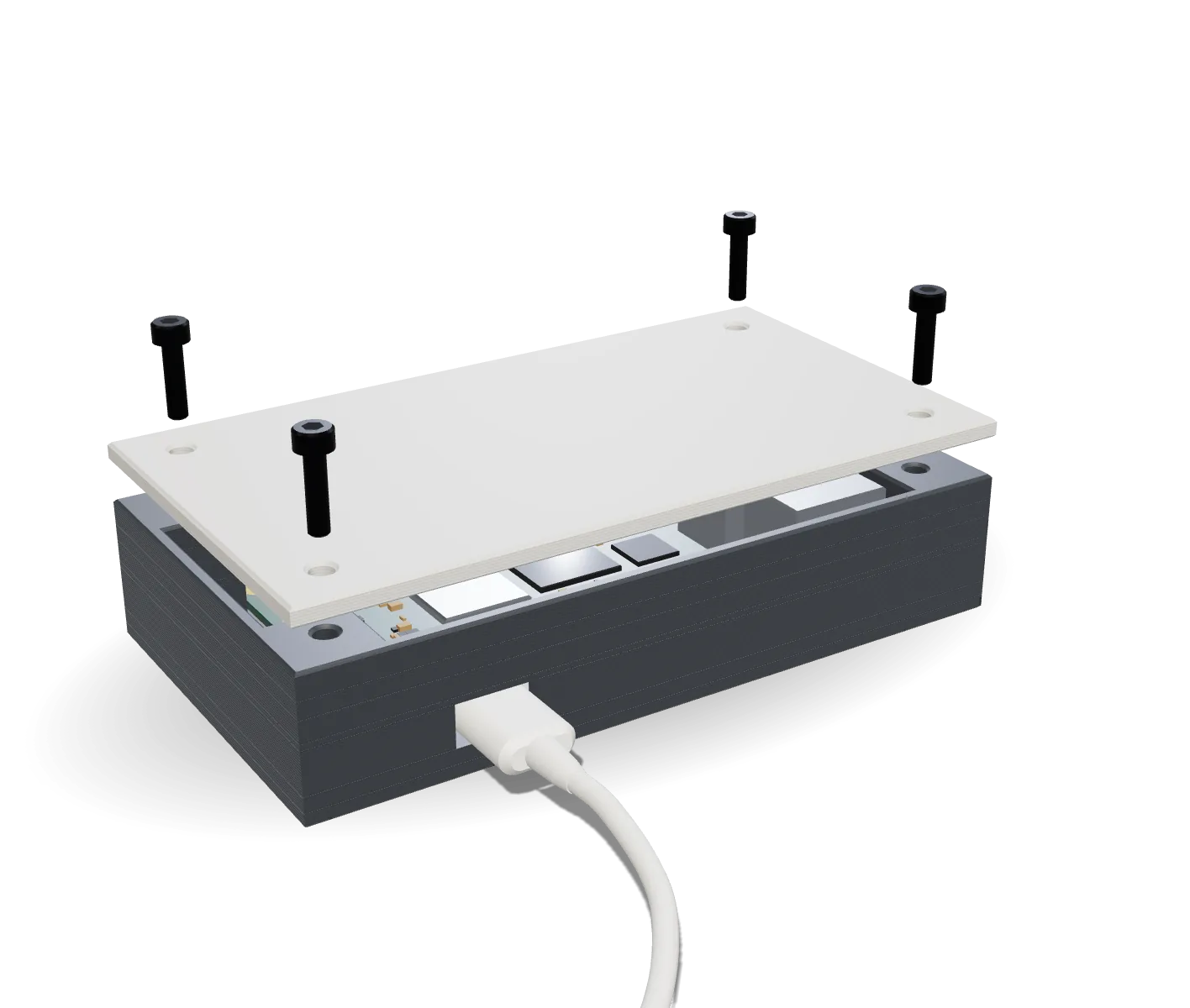
Loading the 3D model…
Every confirmed design comes with
- STEP models
- STL meshes
- Dimensioned PDF drawing
- Parts list
- Check report
- Editable CadQuery source
01 Approach
B.E. means Build Everything.
The goal: describe any mechanical part and get an editable, fully documented design. DETA does it today for enclosures and mounts. Here is one real request, end to end.
What do you need?
A box for my Raspberry Pi 4 with an opening for the USB-C power cable.
- Contents
- Raspberry Pi 4, 88 × 58 × 20 mm Entered
- Orientation
- Flat, long side left to right Default
- Clearance
- 1 mm each side and above Default
- Opening
- USB-C, front wall, 13 × 7 mm Entered
- Walls and floor
- 2.4 mm Default
- Lid
- 3 mm, four M3 × 12 cap screws into captured nuts Fixed
- Material
- PETG, FDM printed Fixed
Every value is a field. Nothing is built from free text.
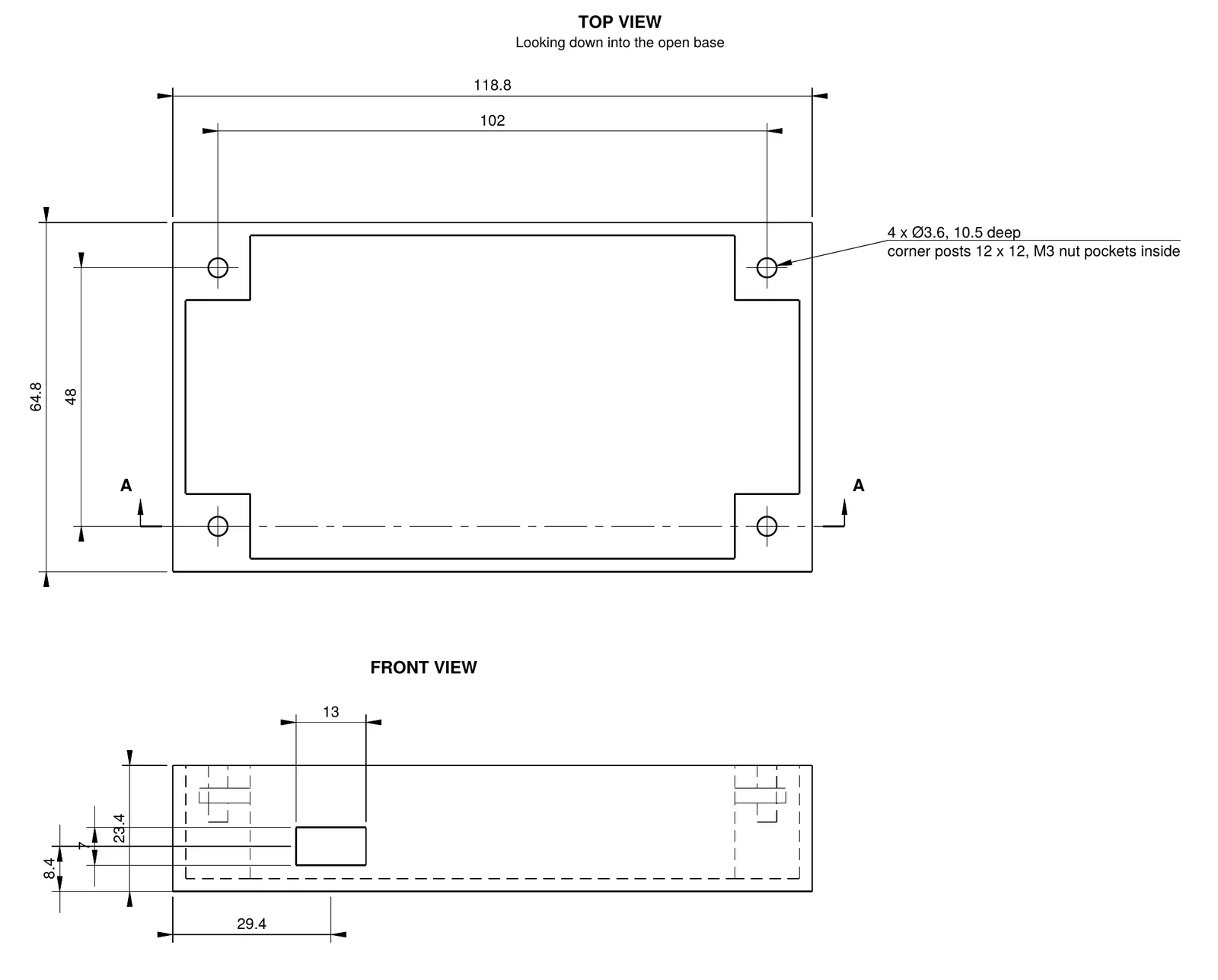
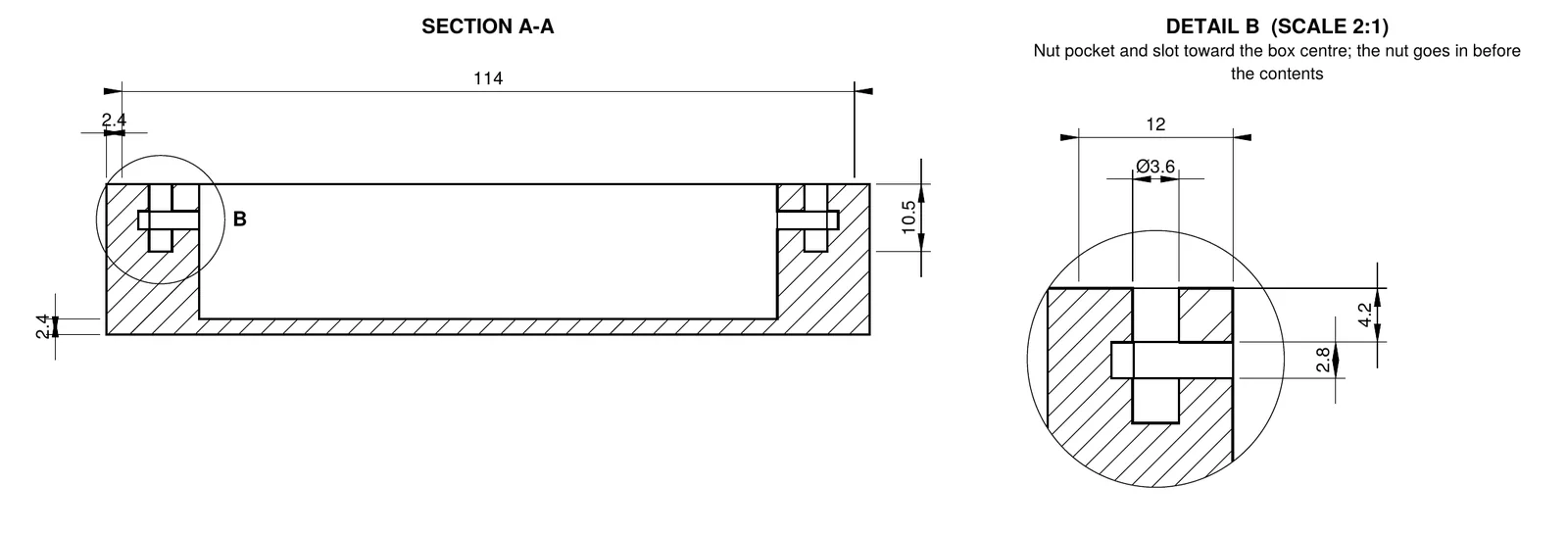
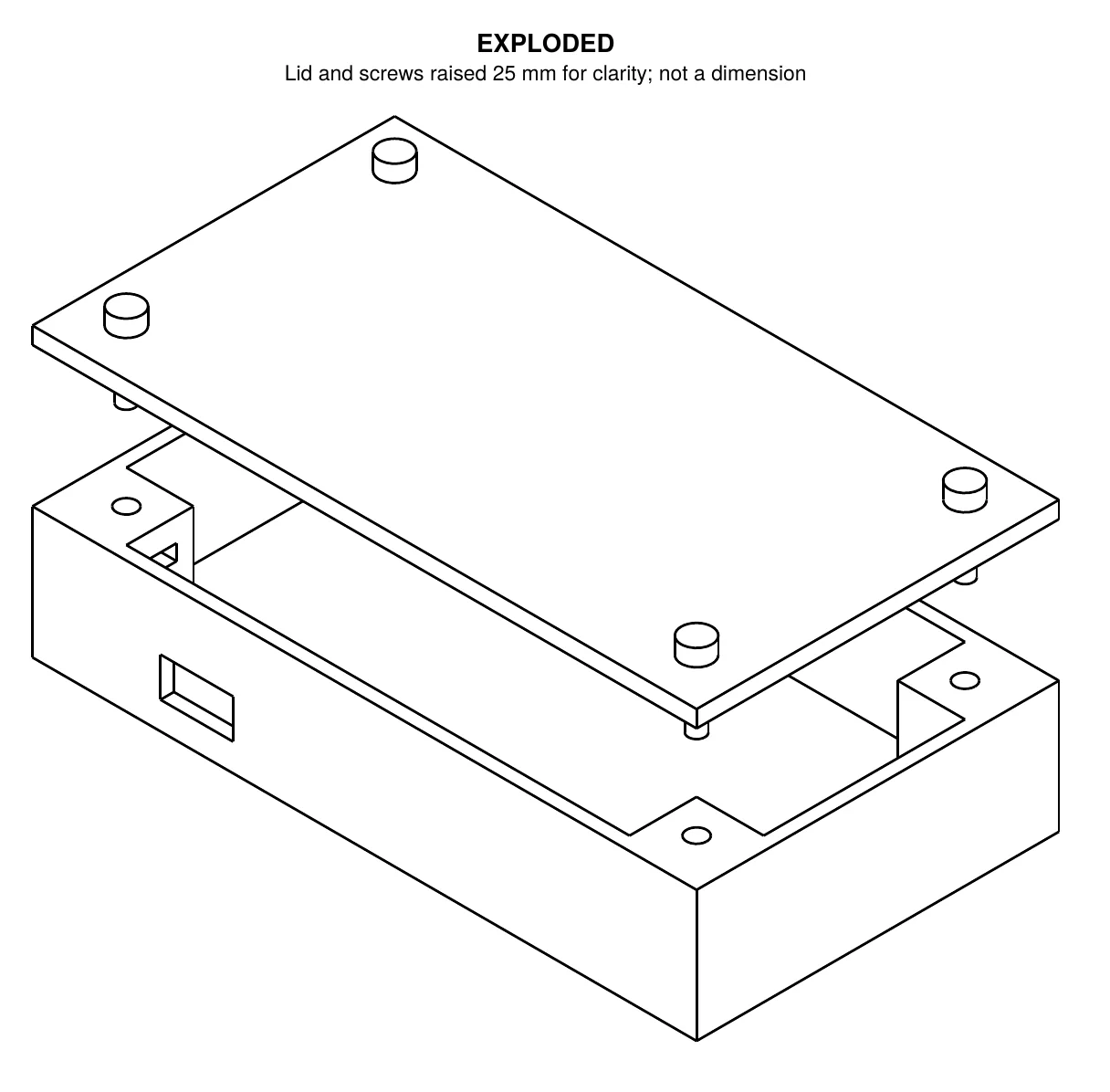
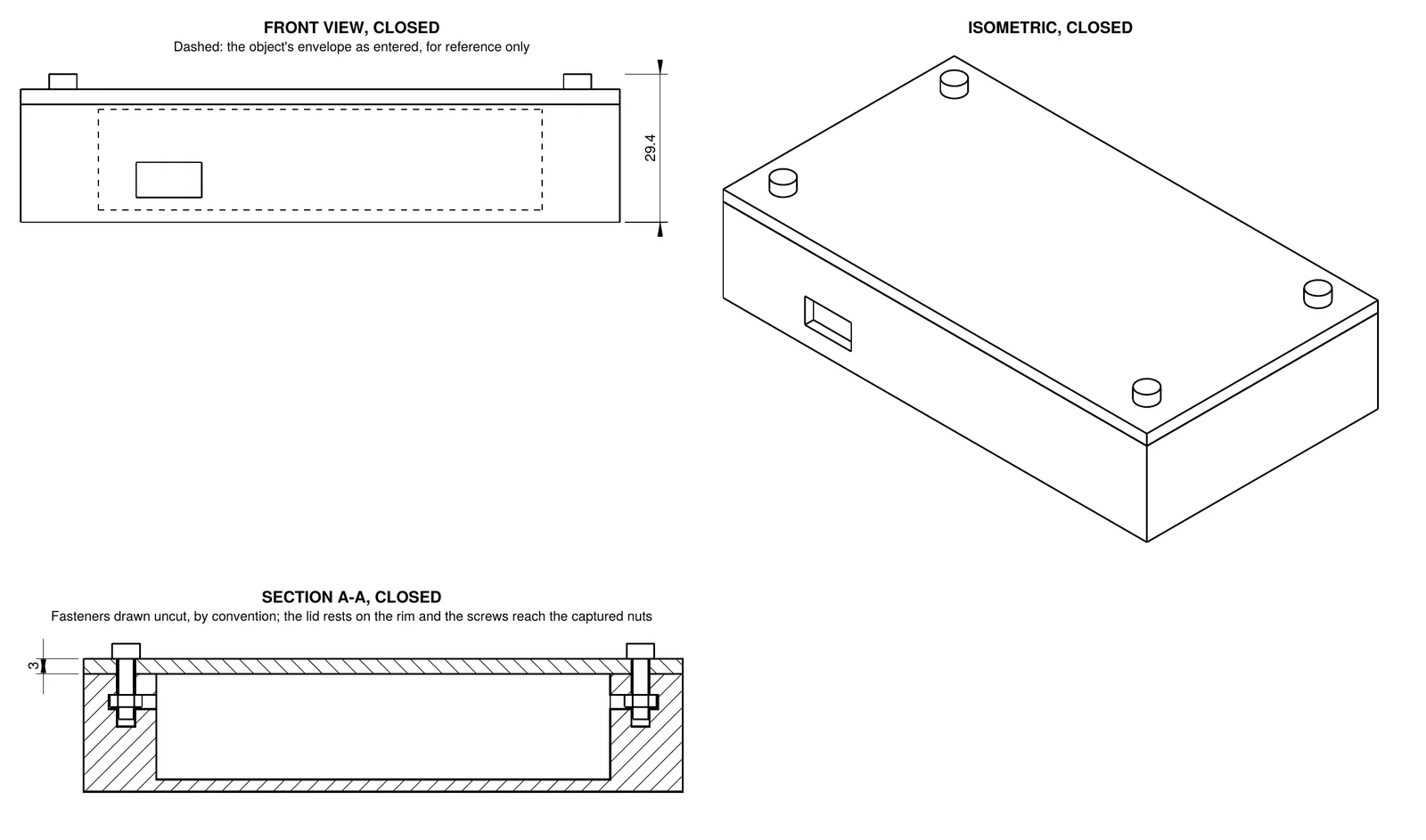
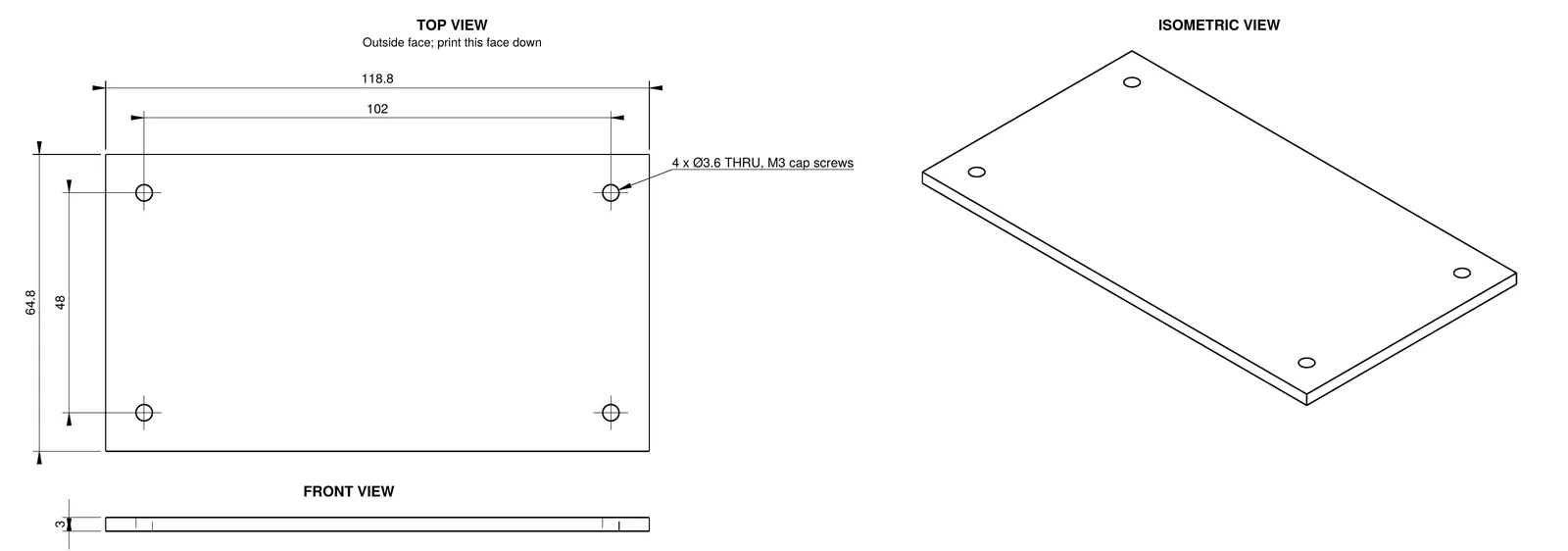
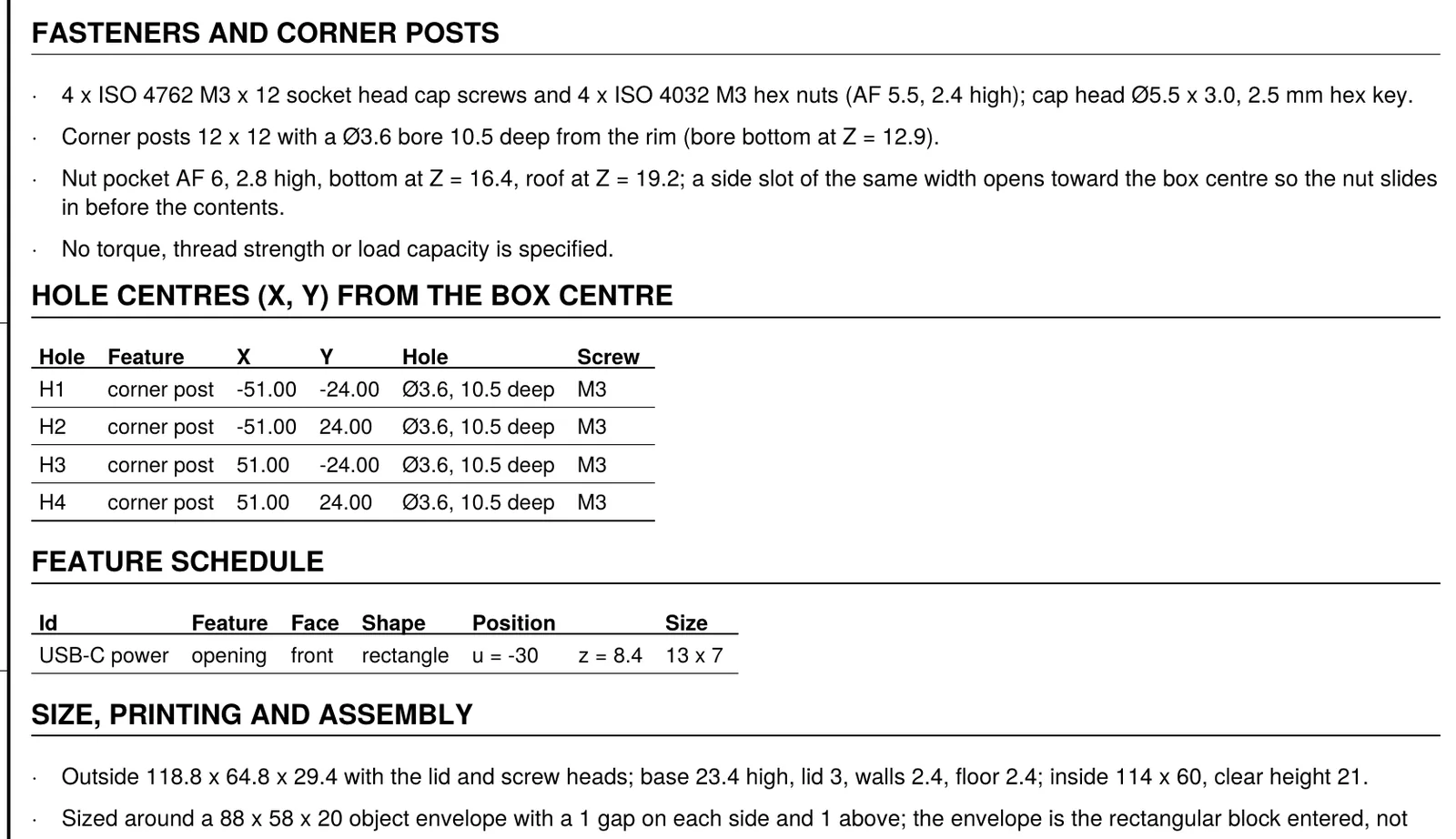
- STEPbase.step · lid.step · assembly.stepCAD models for any CAD tool
- STLbase.stl · lid.stlPrint-ready meshes, in millimetres
- PDFdrawing.pdfSix A3 sheets: views, sections and details
- CSVbom.csvBase, lid, 4 × M3 × 12 cap screws, 4 × M3 nuts
- JSONcheck-report.jsonEvery check, assumption and limit
- PYeditable_model.pyThe parametric source, to change it yourself
01The request
Describe it.
In your own words, or start from a product. One sentence is enough.
02The specification
Confirm the spec.
Every value becomes a typed field. AI can fill it in from your words; nothing is built until you confirm it.
03The design
Modelled, checked and drawn.
DETA builds the CAD, checks it, and draws a full set of dimensioned sheets straight from the model.
- Fit checked
- Assembly checked
- Printability checked
- Six-sheet drawing
04The package
Download the files.
CAD, meshes, the drawing, a parts list and a check report, reviewed before download. Change a value and you get a new version; earlier ones stay as they were.
B.E. Roadmap
Enclosures and mounts today. Whole products next.
- NowAvailable
- EnclosuresSized around what goes inside, with openings, vents, inserts and screw tabs.
- Mounts and adaptersBoards, displays and devices onto walls, DIN rails and aluminium extrusion.
- A spec you confirmAI fills it in, you approve it, and the CAD updates live.
- NextIn development
- Material-aware checksPrint profiles and checks on the real geometry.
- Parts from a descriptionNew designs from shared modelling steps, not just templates.
- Edits in plain wordsAsk for a hole, a boss or a fillet and see it checked.
- LaterPlanned
- Design around your partsUpload an object, design to fit it, and check how parts move.
- More materialsMetal, wood, elastomers, carbon fibre and composites.
- Whole productsSomething like a small drone, from a description, images and dimensions.
Build Everything is a direction, not a claim about today. Current designs are 3D printed in PETG, checked in software and marked Not physically validated.
02 Possibilities
Ask for something specific.
Name the device, the fit and the fixing. You see the design, with its numbers, before anything is made.
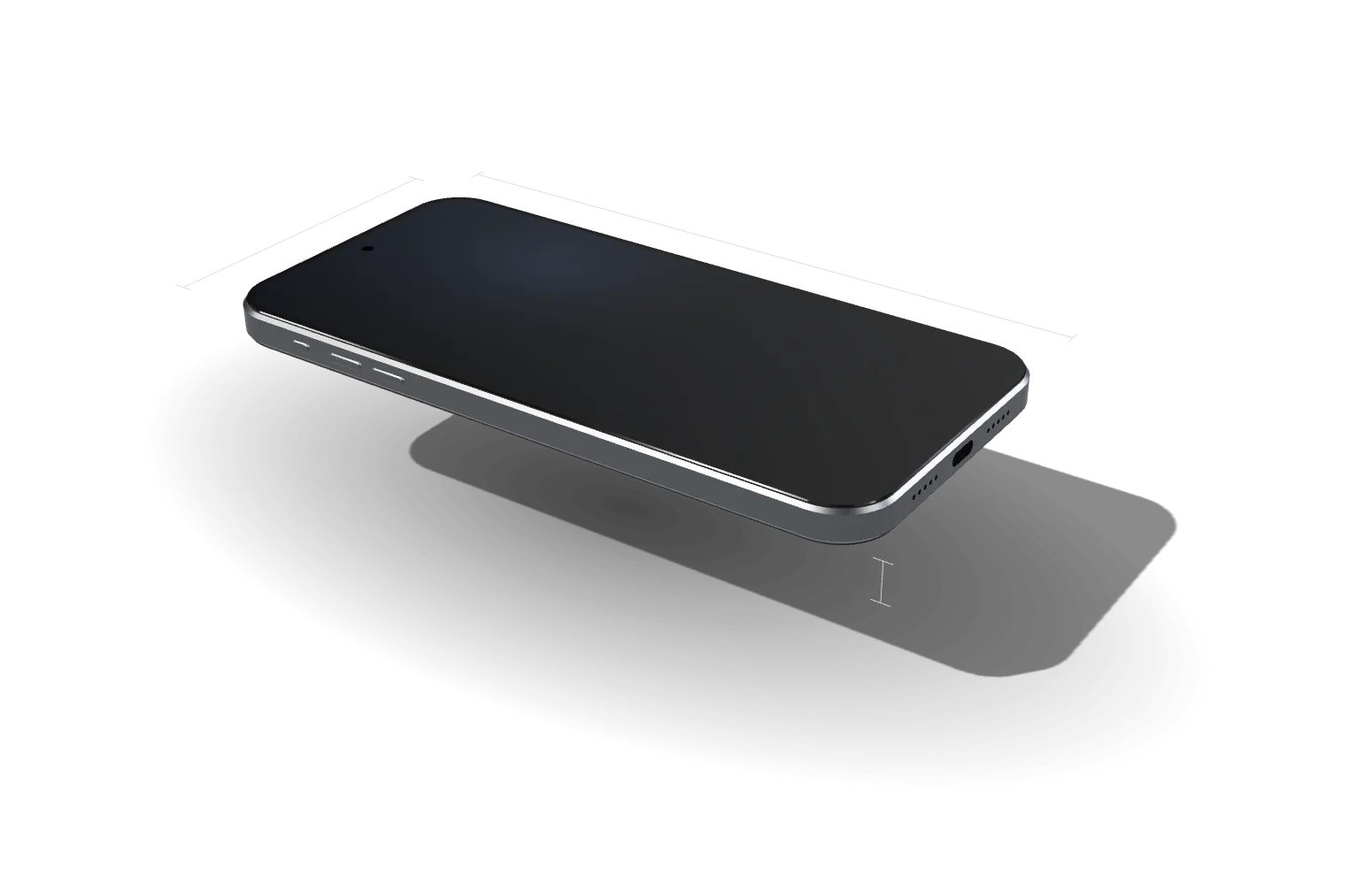
Design me an enclosure for my iPhone 18 Pro Max.
- DeviceApple
- iPhone 18 Pro Max163.4 × 78.0 × 8.75 mm, Apple’s published figures
- Camera bumpCheck
- To be measuredNot in Apple’s figures; this demo allows 4 mm
- OrientationEntered
- Flat, screen up
- ClearanceDefault
- 1 mm all round
- Cable accessEntered
- USB-C, right-hand end13 × 7 mm slot, centred on the port
- LidFixed
- 3 mm, four M3 × 12 cap screwsInto nuts captured in the corner posts
- MaterialFixed
- PETG, FDM printed
Delivered as STEP, STL, a PDF drawing, a parts list and a check report.
Rendered demonstration, not output from DETA. Phone dimensions are Apple’s published figures for iPhone 18 Pro Max; the phone model, port position, camera allowance and enclosure details are illustrative. iPhone is a trademark of Apple Inc.
Mount it anywhere.
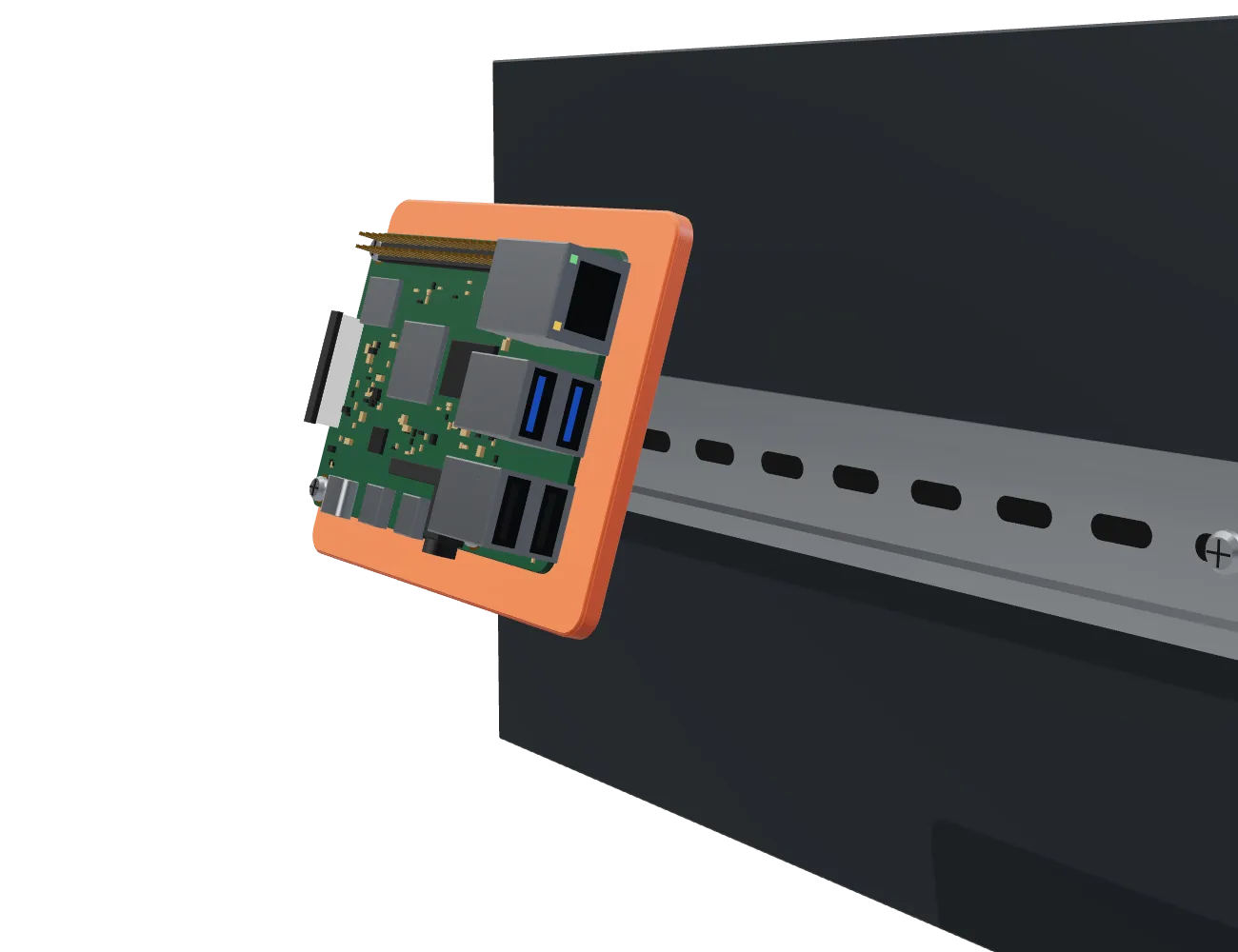
Name the device and where it goes. DETA designs the bracket around the device’s hole pattern and the fixing: a rail, a frame or a wall.
Request
Mount my Raspberry Pi 4 on a 35 mm DIN rail.
Control cabinets
Boards and controllers clip onto standard 35 mm DIN rail, and come off again without tools.
- 35 mm DIN rail
- Tool-free clip
- Raspberry Pi 4 pattern
Rendered demonstrations. Mounts are PETG parts for light, static, indoor loads up to 1 kg, and are not physically validated.
Build everything, one confirmed part at a time.
Each capability goes live when it works, and each limit is written down. Enclosures and mounts are live today.
About DETA